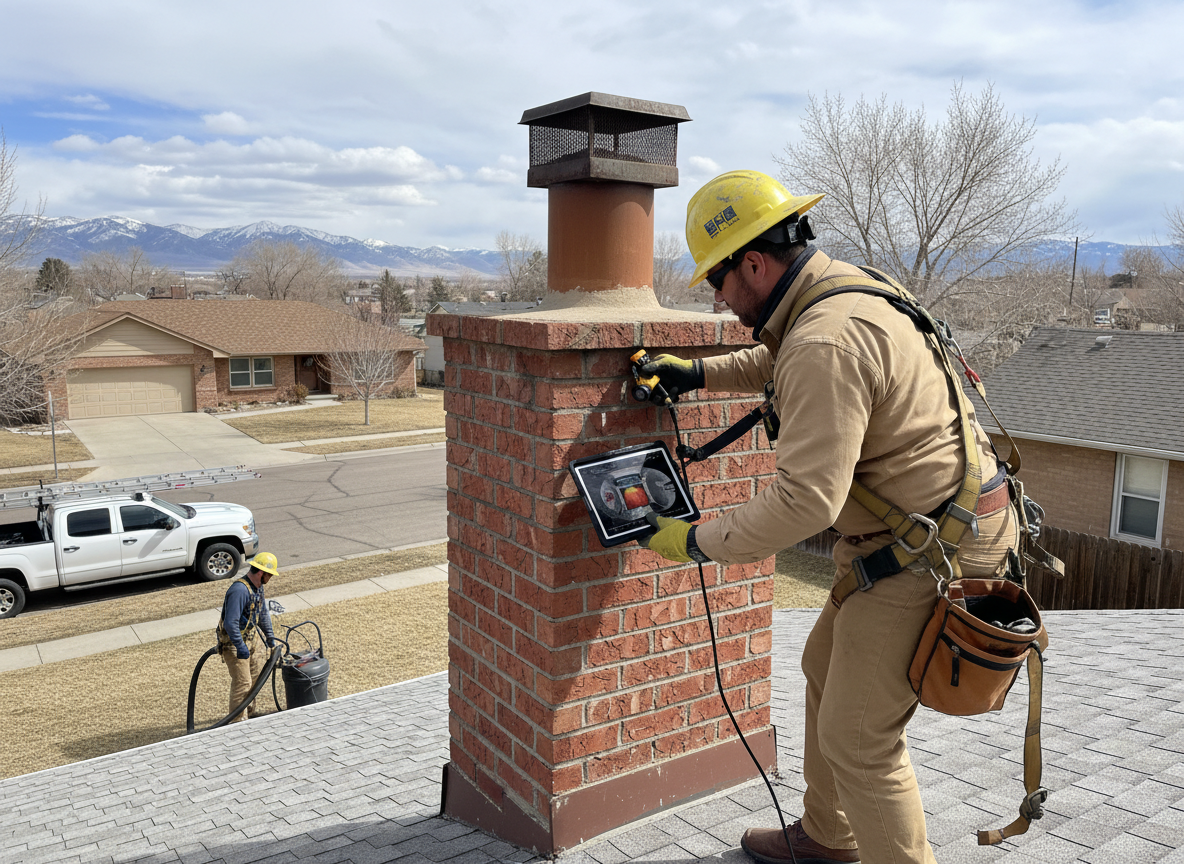
Midvale sits in Salt Lake County where semi-arid conditions combine with cold winters that drive repeated freeze-thaw cycles. These cycles open mortar joints and spall bricks on chimneys built before the 1980s, especially in Old Town Midvale and around Bingham Junction. A proper inspection must check the crown, flue tile, and flashing where snow melt from warm summer days refreezes at night and forces water deeper into the masonry. Homes near the Bingham Junction TRAX Station often sit on slightly lower ground that collects more winter moisture, accelerating deterioration compared with higher lots in Murray or West Jordan.
Inspectors here look for creosote glazing that forms faster when residents burn seasoned wood during the long heating season. They also examine the smoke chamber and damper for warping caused by the temperature swings common between warm summer days and freezing nights. In older stock, clay flue liners frequently show hairline cracks that allow carbon monoxide to migrate into living spaces once the chimney is put back into heavy winter use. Skipping the interior camera pass misses these defects because exterior views alone cannot reveal liner separation hidden behind the brick.
Access on two-story homes in Bingham Junction can require ladders placed on sloped driveways that stay icy into late morning. That terrain detail changes both safety protocols and the time needed to complete a full inspection. Technicians also note whether the chimney serves a wood stove or open fireplace, since each appliance creates different draft and deposit patterns that affect what the inspection must document for code compliance in Salt Lake County.
Common Issues Found During Midvale Chimney Inspections
Freeze-thaw damage to crowns and spalling on south-facing bricks appears most often on pre-1970 homes in Old Town Midvale. Creosote buildup that ignites during the first cold snap is the next frequent finding when residents have not scheduled annual checks after heavy winter use.
Technician insight
In Midvale the thing that catches most people out with chimney inspection service is water that enters through a cracked crown on older brick stacks in Old Town Midvale, then freezes inside the flue during the first cold snap after a warm day near the Bingham Junction TRAX Station. Homeowners often assume a quick exterior look is enough, yet the real damage sits behind the liner where only the camera reaches.
Inspection After Draft Complaint in Bingham Junction
A homeowner in Bingham Junction reported weak draft after several cold nights. Inspection revealed a separated flue tile and heavy creosote from repeated freeze-thaw cycles. The camera pass documented the damage and the report outlined the liner repair needed before safe winter use resumed.
How it works
- 1
Schedule and Gather Details
Confirm address in Midvale or nearby Murray or West Jordan, note chimney type, and set a 24/7 appointment window.
- 2
Exterior Assessment
Check crown, flashing, and brick condition from the ground and roof, noting exposure to prevailing winds and snow accumulation.
- 3
Interior and Flue Inspection
Use camera to examine flue liner, smoke chamber, and damper for cracks, creosote, and blockages common after Salt Lake County winters.
- 4
Report and Recommendations
Deliver written findings with photos and prioritized next steps based on observed conditions in the specific neighborhood.
Pricing
Upfront quotes based on chimney height, access, and number of flues; no hidden fees.