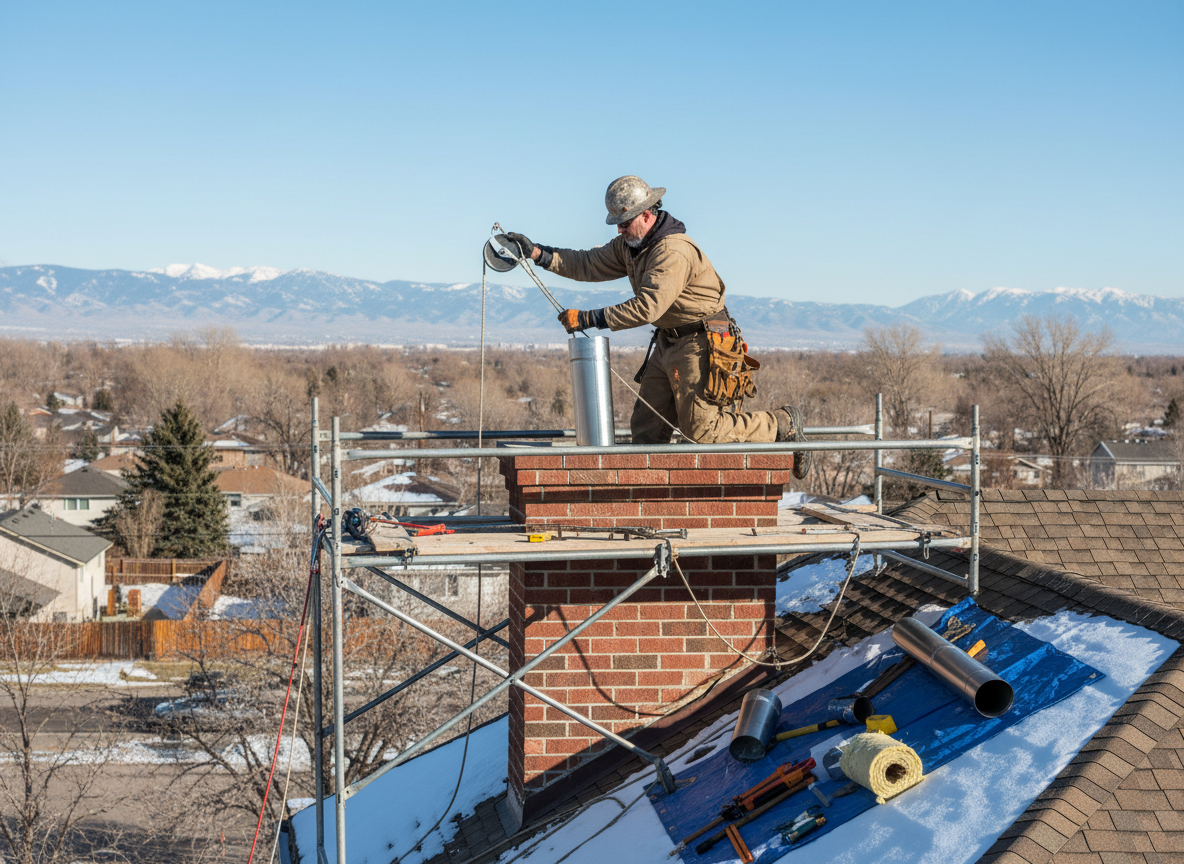
Homes in Old Town Midvale and Bingham Junction often feature masonry chimneys from the 1950s through 1970s that were never designed for today's frequent wood or pellet burning. Semi-arid conditions with sharp winter temperature swings cause clay flue tiles to crack and spall, allowing smoke and creosote to migrate into attics and wall cavities. A proper reline with a stainless steel or cast-in-place liner restores a continuous, insulated flue that meets current IRC requirements while accommodating the thermal expansion that occurs when temperatures swing from below freezing at night to above freezing by afternoon near the Bingham Junction TRAX Station.
Access challenges differ between neighborhoods. Properties near Midvale City Park frequently have chimneys that pass through finished attics or tight roof pitches, requiring sectional liner installation rather than full-length drops. In contrast, homes closer to Murray or West Jordan boundaries may sit on slightly sloped lots where ground-level scaffolding is needed for crown work. Either situation demands careful measurement of flue irregularities before ordering the liner, because a misfit liner can create new draft restrictions that only appear after the first heavy snow load settles on the roof.
Relining also addresses water intrusion common in Salt Lake County. Even with low annual rainfall, melting snow pools against chimney crowns and flashing that have settled unevenly over decades. The new liner includes a rain cap and proper flashing integration that directs water away from the masonry, preventing further deterioration of the flue and surrounding brick. Homeowners in these neighborhoods notice the difference most during the first spring thaw when previously damp odors disappear from upstairs rooms.
Technician insight
In Midvale, the thing that catches most people out with chimney relining is how the freeze-thaw cycles in our semi-arid winters widen existing cracks in clay liners inside 1950s-1970s homes in Old Town Midvale, letting creosote soak into framing long before any visible smoke appears.
Bingham Junction Chimney Relining
Homeowner reported occasional smoke smell in upstairs rooms during cold snaps. Inspection revealed cracked clay tiles and heavy creosote penetration in a 1960s chimney. We installed a new insulated stainless liner with updated flashing. Draft improved immediately and the odor issue ended.
How it works
- 1
Initial Inspection
We examine the flue from top and bottom, checking for cracks, creosote buildup, and clearance issues common in pre-1980 Midvale construction.
- 2
Liner Measurement and Selection
Precise measurements account for bends and offsets found in older chimneys serving homes near Bingham Junction before selecting insulated stainless or cast-in-place material.
- 3
Installation
The new liner is installed with proper insulation and connected to the appliance, restoring draft while sealing against the temperature swings of Salt Lake County winters.
- 4
Final Testing and Cleanup
Draft and smoke tests confirm performance, followed by site cleanup around the chimney crown and roof access points.
Pricing
Pricing varies with chimney height, number of bends, and access difficulty in older Midvale homes.