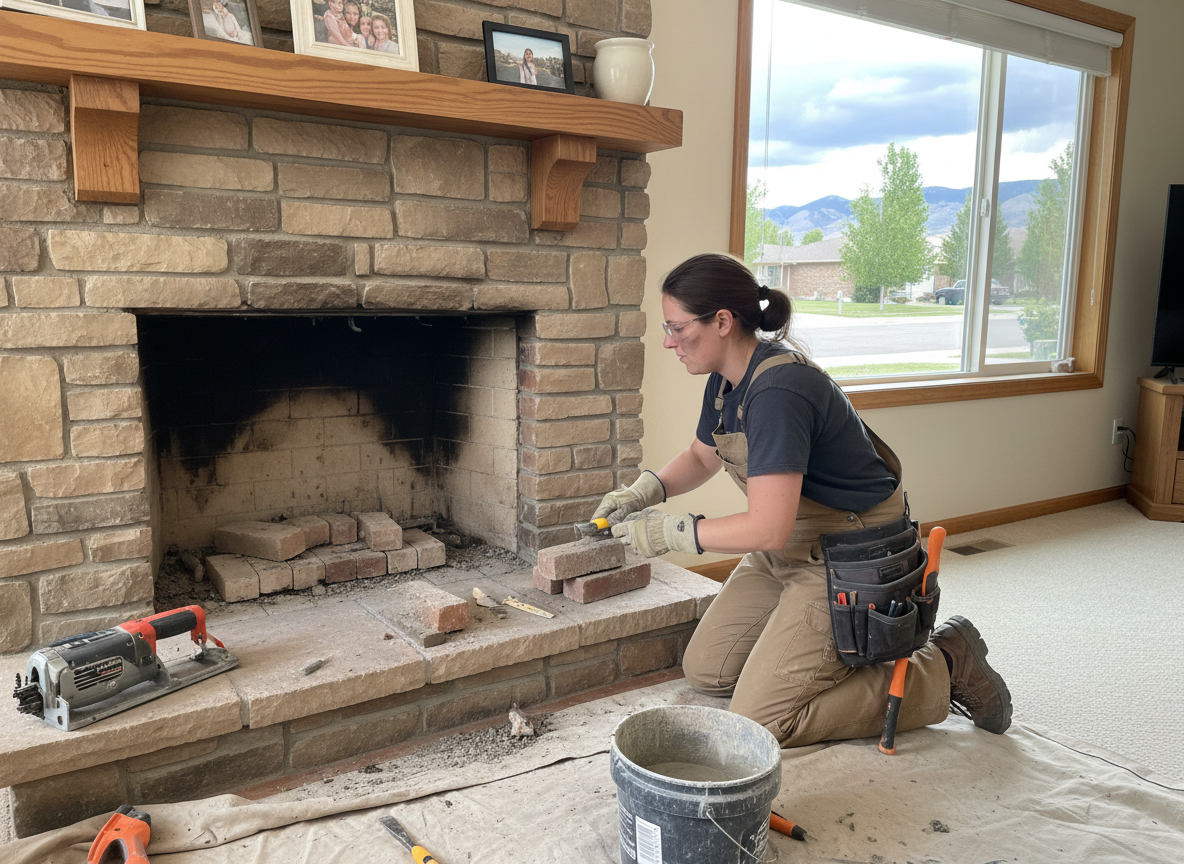
Midvale sits in a semi-arid climate where cold winters push fireplaces into daily use from November through March. Older brick homes in Old Town Midvale and near the Bingham Junction TRAX Station often have original masonry fireboxes that develop hairline cracks from repeated freeze-thaw cycles. These cracks allow smoke and embers to escape into wall cavities, especially when wind funnels through the valley between Murray and West Jordan. Repair work here starts with a camera inspection to map damage before any masonry or refractory work begins.
Fireplace repair in this area frequently involves replacing cracked firebrick or patching refractory panels that have spalled from years of temperature swings. Salt Lake County homes built before the 1980s commonly have single-wall metal liners that corrode faster due to the dry summers followed by heavy winter moisture from snowmelt. Technicians must also check the smoke chamber for creosote buildup that hardens in the cold air and restricts draft. Proper repair restores both safety and efficiency without requiring full chimney rebuilds in most cases.
Homeowners in Bingham Junction often call after noticing odors or white staining on exterior brick, signs that water is entering through failed crown or flashing above the fireplace. The semi-arid summers bake mortar joints, making them brittle when winter moisture returns. Repair crews address these issues by repointing with lime-based mortar matched to the original construction and installing new flashing that ties into existing rooflines common on Midvale's older stock.
Technician insight
In Midvale, the thing that catches most people out with fireplace repair is how freeze-thaw cycles in Old Town Midvale homes crack mortar joints that then leak during spring snowmelt. The dry summers bake everything brittle first, so a small winter draft issue turns into water damage by April if the crown and flashing are not addressed at the same time.
Spalled Firebox Near Midvale City Park
A Bingham Junction homeowner noticed smoke backing into the living room during a cold snap. Inspection revealed spalled refractory panels and a corroded liner installed in the 1970s. The crew removed the damaged panels, installed new refractory, and resealed the liner connection. The fireplace now drafts cleanly with no odors.
How it works
- 1
Initial Assessment
Technician arrives at the Midvale address and performs a visual and camera inspection of the firebox, damper, and liner while noting any odors or staining reported by the homeowner.
- 2
Diagnosis and Quote
Findings are explained on site with photos, and an upfront quote is provided before any work starts on the fireplace repair.
- 3
Repair Execution
Cracked brick or refractory is removed and replaced, mortar joints are repointed, and the damper is adjusted or replaced as needed for proper draft.
- 4
Final Testing
A test fire is burned to confirm smoke draws correctly and no odors remain, with the homeowner shown the completed work.
Pricing
Upfront quotes are given before any fireplace repair work begins, with pricing based on the extent of masonry or liner damage found during inspection.