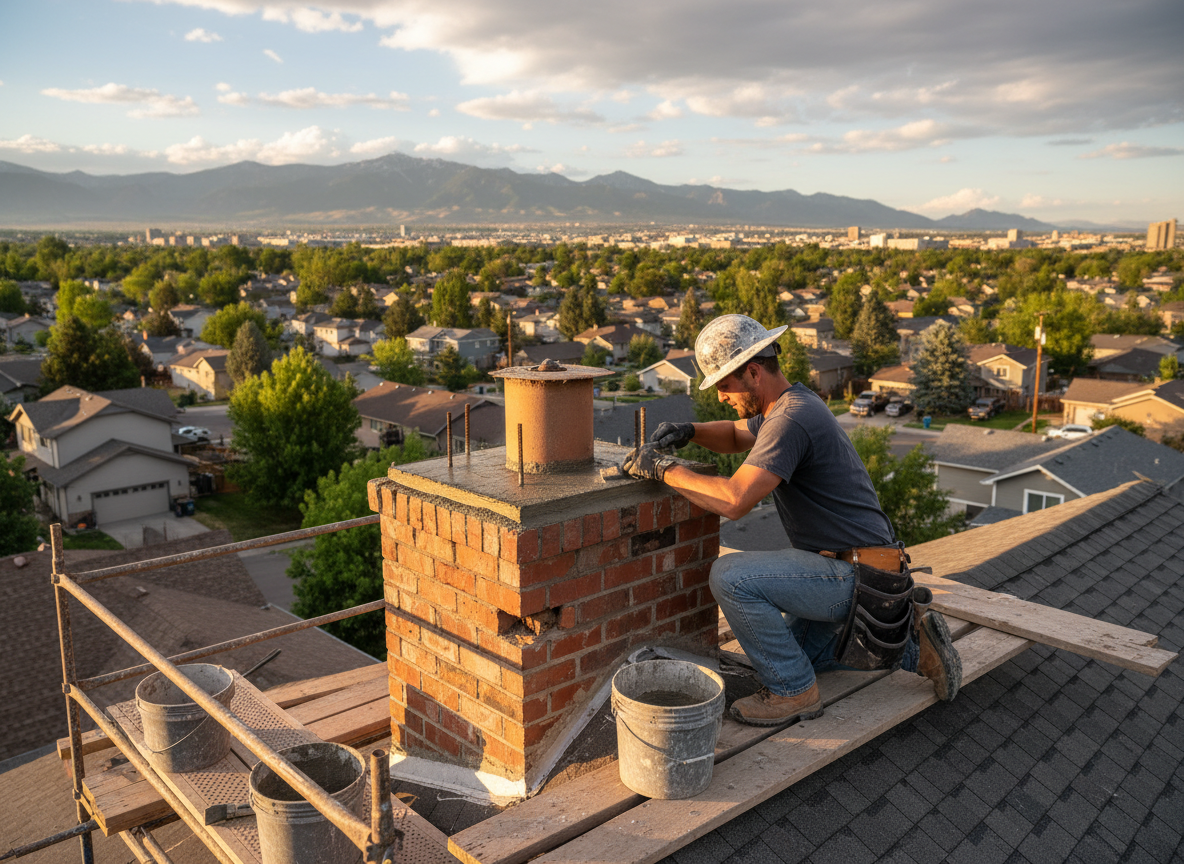
Midvale sits in Salt Lake County where semi-arid conditions and sharp winter freezes create repeated expansion and contraction on chimney crowns. Older brick homes in Old Town Midvale and around Bingham Junction TRAX Station often have crowns poured decades ago without modern expansion joints, so hairline cracks turn into water channels that reach the flue liner and attic. We see this pattern most after the first hard freeze when homeowners notice interior staining near the chimney breast.
Repair starts with removing loose concrete and any failed parging, then installing a new crown with a proper overhang and drip edge. In neighborhoods near Midvale City Park the prevailing wind carries extra moisture from the Jordan River corridor, so we add a stainless steel cap anchor and flexible sealant rated for -20 °F. Skipping the overhang or using standard mortar instead of a true crown mix leads to the same failure within two seasons.
We also check the flashing where the crown meets the roof deck. Many 1970s–1980s homes in Bingham Junction have single-layer step flashing that has pulled away; re-sealing it during crown work prevents the next leak path. Salt Lake County building code requires the new crown to slope outward at least 1 inch per foot, a detail that eliminates ponding on flat tops common in older Midvale construction.
Because we operate 24/7 from 7176 Union Park Ave, we can respond the same day when a crown failure is discovered during a cold snap before water reaches the ceiling.
Technician insight
In Midvale, the thing that catches most people out with chimney crown repair is the freeze-thaw cycle on older brick chimneys in Old Town Midvale and Bingham Junction. Homeowners assume a hairline crack is cosmetic until meltwater runs down the flue and stains ceilings. The local wind pattern near Midvale City Park pushes extra moisture against south-facing crowns, so we always add a true overhang and stainless anchor rather than just patching.
Bingham Junction Crown Failure
Water stains appeared on the ceiling of a 1980s home near Bingham Junction TRAX Station after a January thaw. We found the original crown had no overhang and multiple through-cracks. We removed the failed concrete, formed a new sloped crown with drip edge, resealed the flashing, and confirmed no further moisture entry on the follow-up visit.
How it works
- 1
Site Assessment
Inspect crown, flashing, and liner condition from the roof and interior access points in Midvale homes.
- 2
Material Removal
Chisel out cracked concrete and deteriorated parging while protecting roof surfaces common on older Salt Lake County properties.
- 3
Form and Pour
Install reinforced form with correct overhang and slope, then pour a monolithic crown mix designed for freeze-thaw cycles.
- 4
Seal and Flash
Apply flexible sealant at joints and re-secure step flashing to prevent water entry at the roof line.
- 5
Final Check
Verify drainage, cap fit, and absence of interior moisture before leaving the job.
Pricing
Upfront quote after roof inspection; cost driven by crown size, extent of flashing repair, and whether liner work is required.