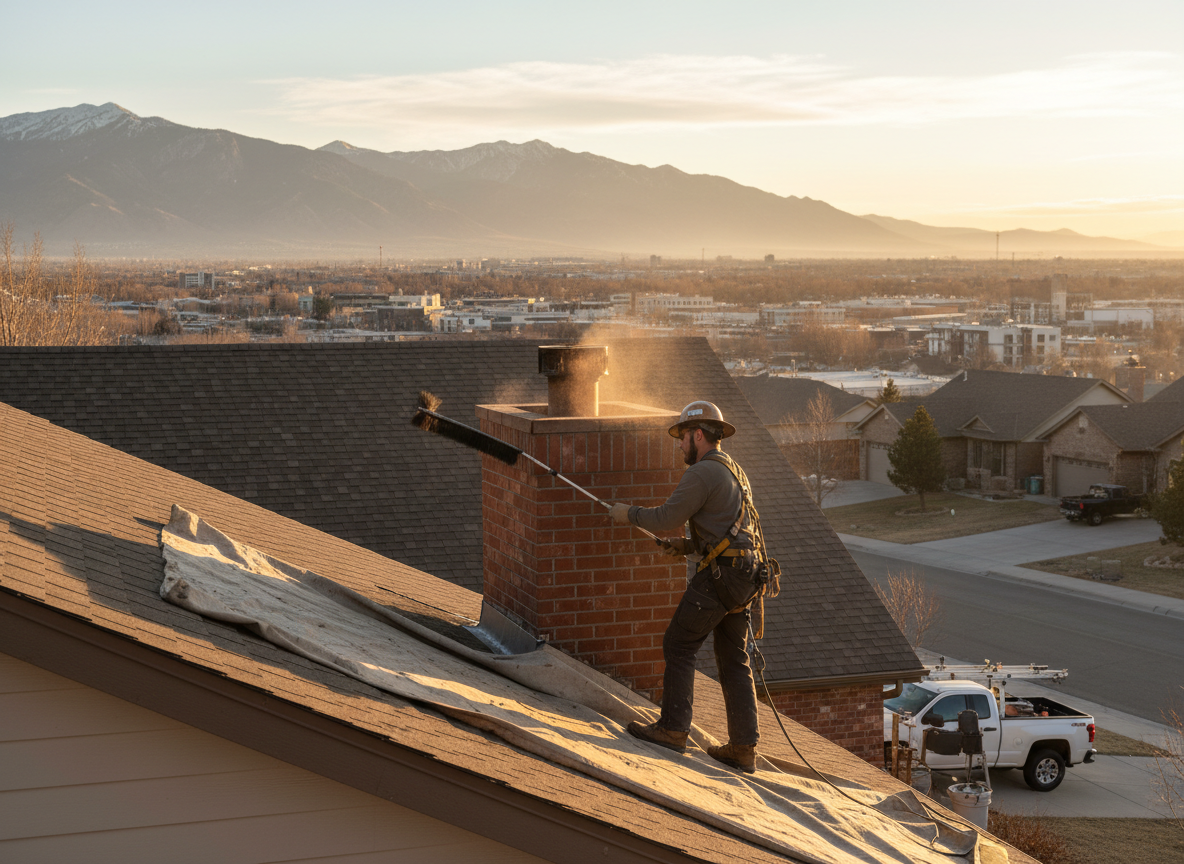
Midvale sits in Salt Lake County with a semi-arid climate that brings cold winters and occasional heavy snow. These conditions cause rapid creosote accumulation inside flues, especially in homes built before 1970 in Old Town Midvale. Brick chimneys common to that neighborhood absorb moisture during warm summers then freeze and spall when temperatures drop, so annual cleaning and inspection focus on both the flue lining and the exterior crown and flashing.
Homes near the Bingham Junction TRAX Station often sit on flatter valley terrain where wind patterns reduce draft. This leads to incomplete combustion and thicker creosote layers than in hillier parts of Murray or West Jordan. Maintenance visits include checking for hairline cracks in clay tiles or metal liners that allow smoke to leak into attics during the first cold snap of the season.
Routine work also covers the damper assembly and smoke chamber, areas that collect debris from cottonwood and maple trees planted throughout Midvale City Park neighborhoods. Technicians remove nests and loose mortar before they block airflow or create hidden fire hazards behind the brickwork.
Draft and Liner Assessment
Local wind patterns and older construction mean every maintenance visit measures draft with a smoke test and inspects liner condition for gaps that let heat reach framing. This step catches issues before they require full rebuilds common in Salt Lake County brick homes.
Technician insight
In Midvale, the thing that catches most people out with chimney maintenance is how quickly creosote builds in older brick chimneys around Old Town Midvale during our long cold snaps; the valley floor and limited wind keep fires burning cooler, so homeowners who skip the fall sweep often end up with glazed creosote that needs chemical treatment before a standard brush will touch it.
Blocked Draft in Bingham Junction Chimney
Homeowner noticed smoke rolling into the living room on the first cold night. Inspection revealed heavy creosote and a partial bird nest blocking the flue near the crown. Crew removed the blockage, brushed the full length of the chimney, and confirmed restored draft with a smoke test. The system passed inspection and the homeowner resumed safe use.
How it works
- 1
Initial Inspection
Examine flue, crown, flashing, and damper from roof and interior access points.
- 2
Creosote Removal
Brush and vacuum all stages of buildup, paying extra attention to the smoke chamber.
- 3
Masonry Check
Look for spalled brick, cracked mortar, and water intrusion points around the crown.
- 4
Draft Verification
Perform smoke test and confirm proper airflow before completing the visit.
Pricing
Pricing based on chimney height, access difficulty, and condition found during inspection; upfront quotes provided before work begins.