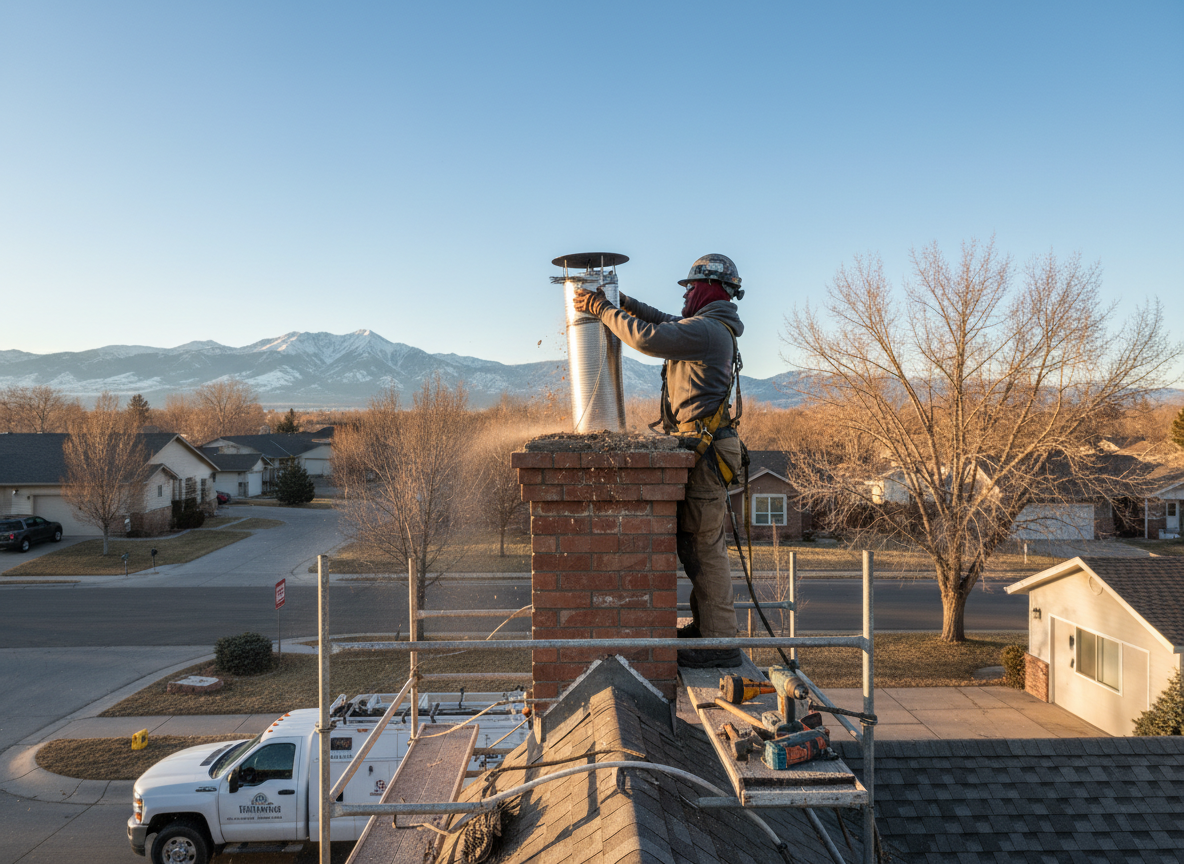
Midvale homes built before the 1980s in Old Town Midvale and near Bingham Junction TRAX Station often have clay or early metal liners that crack when temperatures swing from below freezing to daytime thaws. Salt Lake County's semi-arid climate keeps summers dry but packs winters with repeated freeze-thaw cycles that force moisture into hairline fractures, widening them until flue gases leak into living spaces. We inspect the full flue run from the smoke chamber to the crown, checking for spalling brick and water tracking along the chimney chase that sits against the prevailing west winds off the valley floor.
Stainless steel or cast-in-place liners are the two options we install most often here. Stainless resists the acidic condensate that forms when gas appliances run after wood fires, while cast-in-place fills irregular flues common in 1950s-1970s tract homes between Murray and West Jordan. Access through the attic in two-story houses near Midvale City Park usually requires temporary roof protection to avoid damaging asphalt shingles during the cold months when most calls arrive.
We always verify that the new liner maintains the required clearance to combustibles and terminates correctly above the roofline per local building standards. Homeowners in Bingham Junction sometimes discover that previous repairs used undersized liners after a new high-efficiency furnace was installed, creating drafting problems that only appear once snow loads sit on the roof. Proper sizing prevents carbon monoxide backdrafting during the long inversion periods that trap cold air in the valley.
Before any liner work we photograph the interior condition and note any shared flues serving multiple appliances, a layout found in many duplexes along Union Park Avenue. This documentation protects both the homeowner and the next contractor who may work on the same stack.
Technician insight
In Midvale the thing that catches most people out with chimney liner repair is water that migrates down the outside of the flue through the brick joints in Old Town Midvale homes; by the time the liner fails the chase is already saturated and the new liner alone won't stop the next leak unless we address the crown and flashing at the same time.
Cracked Clay Liner in Bingham Junction Duplex
A homeowner in Bingham Junction reported faint smoke smell on the second floor during cold snaps. Camera inspection showed a cracked clay liner serving both the furnace and water heater in a shared flue. We removed the old liner, installed a properly sized stainless steel replacement, and resealed the crown. Draft improved and no further odor occurred through the rest of the winter.
How it works
- 1
Initial Flue Assessment
We arrive with a camera and measure the existing liner diameter, length, and condition while checking for creosote buildup or water staining from the crown down to the smoke chamber.
- 2
Material Selection and Sizing
Based on appliance type and house age we recommend stainless steel or cast-in-place, confirming the liner will maintain proper draft through Midvale's winter inversions.
- 3
Liner Installation
The old liner is removed where possible, the new one is inserted or poured, and all connections are sealed at the appliance and crown to prevent exhaust leakage.
- 4
Final Testing and Documentation
We perform a smoke test, photograph the finished work, and leave a written report noting any additional masonry repairs needed before the next heating season.
Pricing
Cost depends on flue height, liner material, and whether the chimney chase requires opening; we provide an upfront written quote after the inspection.