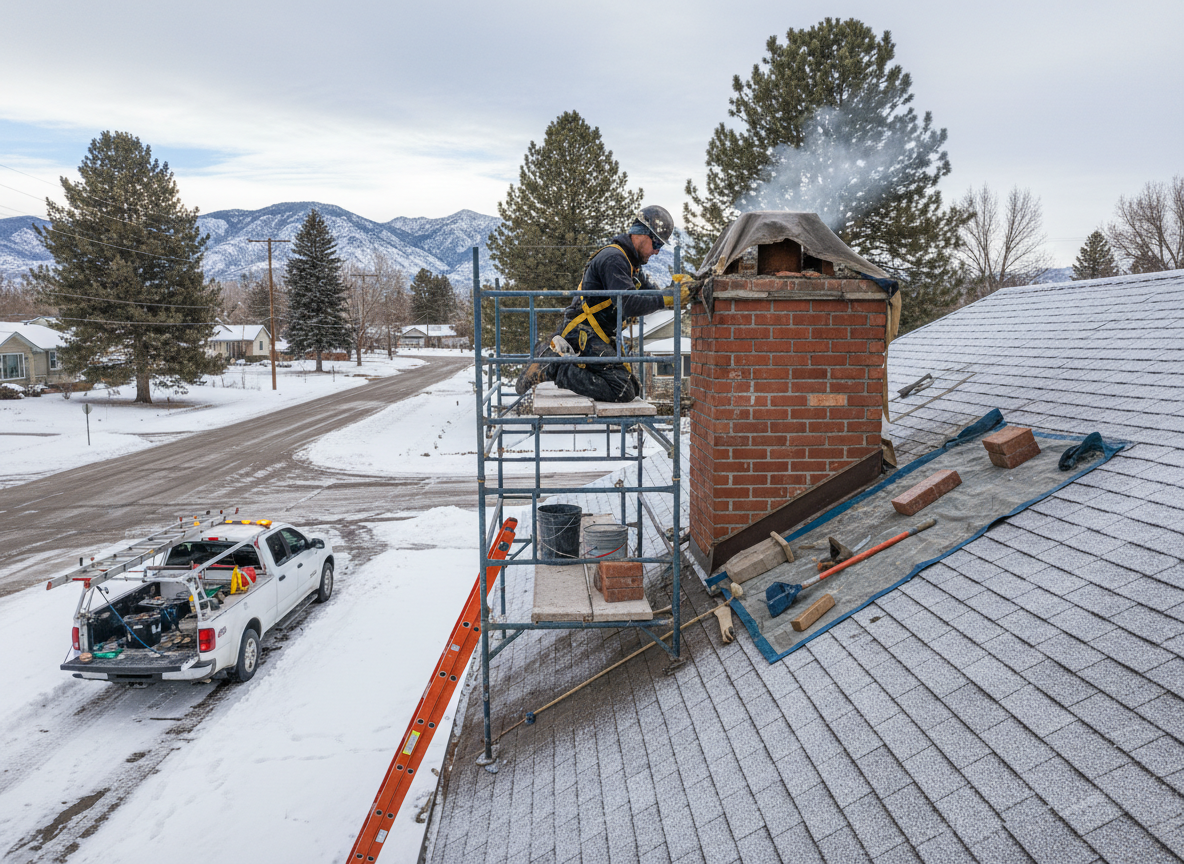
Midvale winters bring repeated freeze-thaw cycles that open mortar joints and spall bricks on chimneys in pre-1980 homes throughout Old Town Midvale and Bingham Junction. When a flue liner cracks or a crown separates, water enters the stack and can reach the attic or walls within days. Emergency calls often involve stabilizing the structure first so the home can stay occupied while permanent repairs are scheduled.
Access in these neighborhoods is usually from the roof edge near single-story additions or from the interior cleanout door in basements common to Salt Lake County housing stock. Heavy snow loads around Midvale City Park or near the Bingham Junction TRAX Station can add weight to already compromised crowns, turning a small leak into an active draft failure. Technicians carry temporary caps, rain collars, and stainless patches sized for the 8-by-8 and 8-by-12 flues typical in Murray and West Jordan border homes.
Gas appliance venting in these older chimneys frequently shares the stack with wood-burning inserts, so an emergency blockage can send carbon monoxide back into living spaces. Crews check for proper draft, clear creosote bridges, and install temporary liners when the original clay has shifted. Work is performed from the 7176 Union Park Ave base with 24/7 dispatch to reach addresses in Old Town Midvale before the next cold front arrives.
Technician insight
In Midvale, the thing that catches most people out with emergency chimney repair is how quickly the semi-arid freeze-thaw cycles open mortar joints on the north-facing side of chimneys in Old Town Midvale homes built before the 1980s; once that joint opens, one good snow load near the TRAX station is enough to drop a brick into the flue.
Crown Separation After Early Snow
A Bingham Junction homeowner noticed water stains on the ceiling after the first heavy snow. Inspection showed the chimney crown had separated at the flue tile joint, allowing meltwater to run down the stack. Temporary stainless collar and rain cap were installed the same evening to stop further intrusion until a full crown rebuild could be scheduled.
How it works
- 1
Initial Phone Assessment
Gather details on symptoms, home age, and recent weather to determine urgency and needed equipment.
- 2
On-Site Safety Check
Inspect from ground and roof, confirm carbon monoxide risk, and secure the area before any internal work.
- 3
Stabilization and Containment
Apply temporary caps or patches to stop water entry and restore draft while planning permanent repair.
- 4
Documentation and Quote
Photograph damage, explain findings to the homeowner, and provide a written scope with timeline.
Pricing
Upfront quotes after inspection; emergency response includes travel within Midvale and adjacent Salt Lake County neighborhoods.