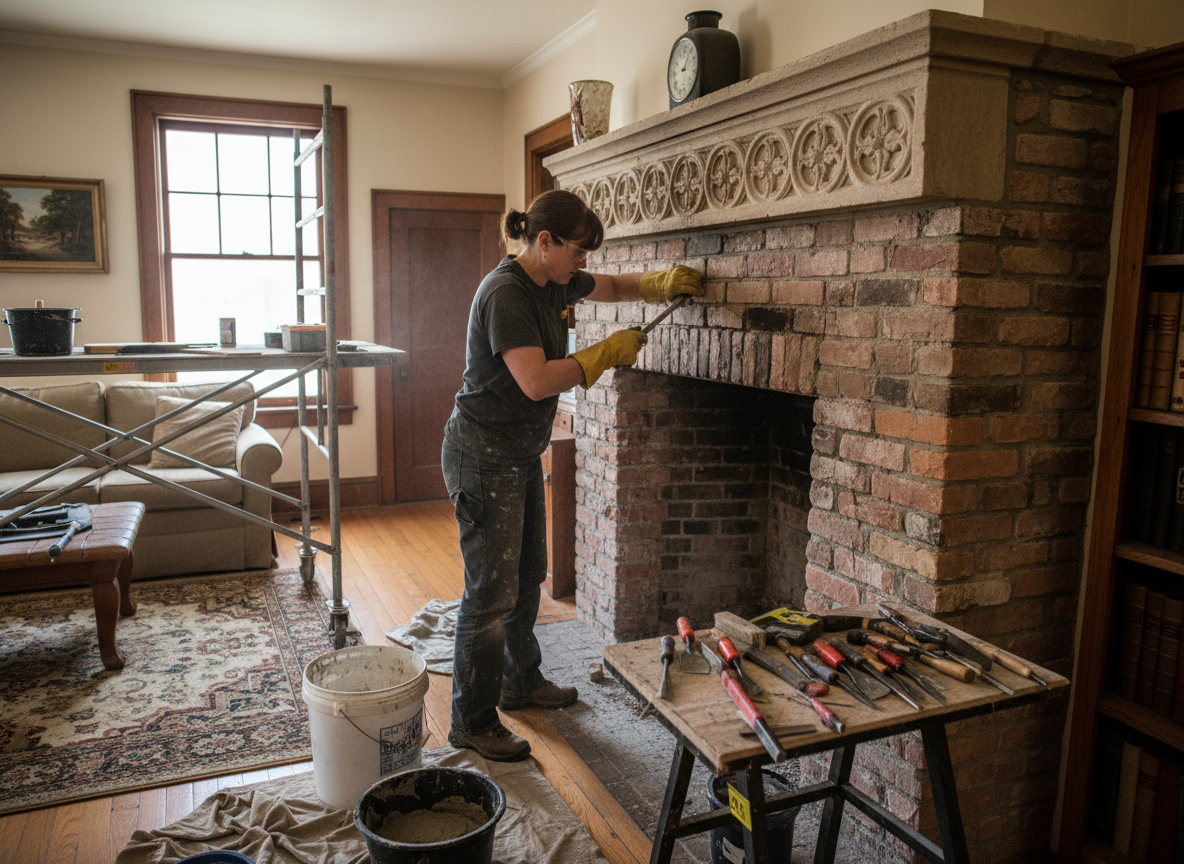
Midvale homes built before the 1980s in Old Town Midvale and near the Bingham Junction TRAX Station often feature masonry fireplaces with single-wall flue liners that crack under repeated freeze-thaw cycles. Semi-arid conditions keep summers dry but winter lows below freezing drive moisture into mortar joints, spalling bricks along the chimney breast. Restoration starts with a full camera inspection to map liner damage and creosote buildup before any masonry work begins. Removing loose material without disturbing the surrounding brick requires hand tools rather than power chisels to avoid widening existing cracks that already let combustion gases into living spaces.
Restoration in Salt Lake County neighborhoods frequently involves rebuilding the smoke chamber and damper assembly because original cast-iron dampers seize from years of ash and temperature swings. We match new refractory mortar to the existing clay flue tiles so expansion rates stay compatible during warm summer days that reach the 90s. When water intrusion from roof valleys near Midvale City Park has saturated the crown, we form a new concrete cap with proper overhang and flashing rather than simply parging over the damage. This prevents the same moisture from reaching the firebox floor and undermining the hearth extension that sits directly on the slab.
Homeowners in Murray and West Jordan sometimes attempt DIY tuck-pointing with modern cement mortars that are too rigid for the soft historic brick common in Bingham Junction. The mismatch causes new cracks within one winter season. Our process uses lime-based mortar formulated for the local clay units and finishes the joints with a profile that sheds water away from the face. Every restored fireplace receives a final draft test under cold conditions to confirm negative pressure pulls smoke correctly before the job is signed off.
Winter Preparation Steps
Before temperatures drop, inspect the firebox for hairline cracks around the damper and clean the smoke shelf of any accumulated debris that restricts draft. Check exterior mortar joints above the roofline for missing pieces that allow snow melt to enter. Schedule a camera scan if you notice white efflorescence on interior brick, a sign that salts are migrating from repeated moisture exposure in Midvale winters.
Technician insight
In Midvale, the thing that catches most people out with fireplace restoration is the single-wall clay liners in pre-1970s homes around Old Town and Bingham Junction. One winter of trapped moisture from a small crown crack is enough to spall an entire course of brick, and the rigid modern mortar many homeowners use makes the next freeze-thaw cycle worse.
Cracked Liner and Spalled Breast in Bingham Junction
A homeowner near the TRAX station reported smoke rolling into the room on cold nights. Camera inspection showed a cracked clay liner and water staining behind the firebox. We removed the damaged liner, rebuilt the smoke chamber with refractory materials, and installed a new stainless liner sized for the existing flue. The fireplace now drafts correctly even when temperatures drop below freezing.
How it works
- 1
Initial Camera Inspection
We run a high-resolution camera through the flue from the firebox to the crown, documenting liner condition, creosote levels, and any offset joints common in Midvale's older stacks.
- 2
Damage Mapping and Quote
Findings are reviewed on site with the homeowner so every repair item is explained before work starts, including how freeze damage in Old Town Midvale brick will be addressed.
- 3
Material Removal and Prep
Loose brick, failed mortar, and damaged liner sections are removed by hand to protect surrounding masonry from further cracking.
- 4
Rebuild and Finish
New refractory components and lime-based mortar are installed, the crown is reformed if needed, and the fireplace is tested for proper draft.
Pricing
Upfront written quotes after the camera inspection; final price depends on liner condition and extent of brick damage.