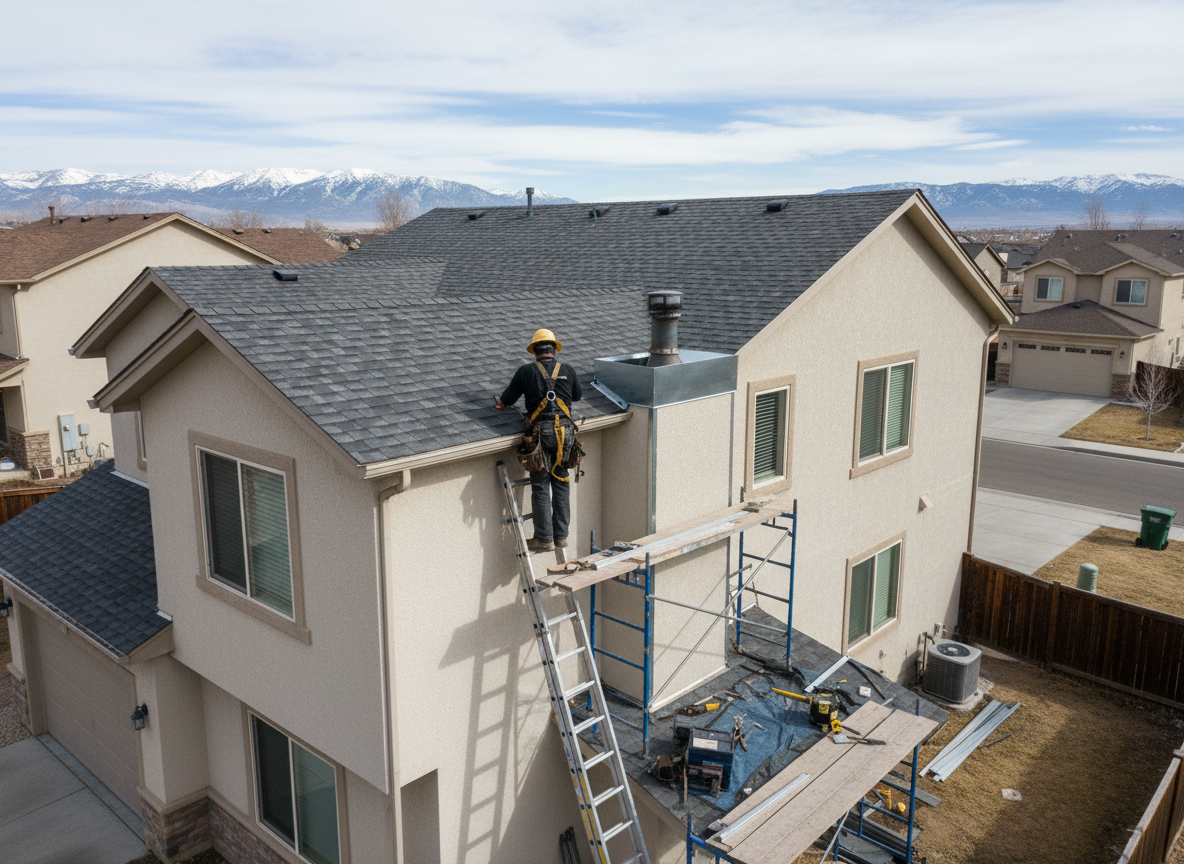
Midvale sits in Salt Lake County with a semi-arid climate that brings sharp winter freezes and warm summers. Prefabricated chimneys in neighborhoods like Old Town Midvale and Bingham Junction often suffer from repeated freeze-thaw cycles that crack outer shells and degrade factory seals. Older housing stock near Murray and West Jordan frequently uses these units in additions or 1980s-1990s builds where original liners were not rated for the region's temperature swings. Homeowners notice draft loss or water stains first because the metal expands and contracts differently than masonry.
Repair work here starts with confirming the unit model and checking for proper clearances to nearby rooflines common on Midvale's single-story ranches. We replace damaged sections of the prefabricated stack, reseal joints with high-temperature silicone rated for Utah winters, and verify the chimney cap remains secure against the dry summer winds that carry dust into every seam. Edge cases include homes close to the Bingham Junction TRAX Station where vibration from trains can loosen factory connections over time. Code notes require maintaining listed clearances when any component is swapped, and we always inspect the attic penetration for proper firestopping.
Soil conditions in the area add another layer because Midvale's clay-heavy ground shifts slightly with irrigation runoff from nearby parks, which can tilt the base of exterior chimneys. This tilt stresses the prefabricated joints and allows water intrusion during the occasional heavy spring rain. We correct minor settling by shimming the base plate and installing additional support brackets anchored into the roof structure. The work avoids full teardown when the inner flue remains intact, saving homeowners the cost of replacing an entire system that still meets current venting requirements for gas appliances common in the county.
Technician insight
In Midvale, the thing that catches most people out with prefabricated chimney repair is how the clay soil around Old Town Midvale shifts with irrigation and tilts the base just enough to open seams that look fine from inside. Cold winters then force water into those gaps and freeze them shut until spring thaw reveals the leak. We see this more often on homes near Midvale City Park than on the newer builds in Bingham Junction.
Shifted Base on a Bingham Junction Ranch
A prefabricated chimney on a 1990s home near Bingham Junction TRAX Station showed poor draft and interior staining after a hard freeze. Inspection found the clay soil had settled unevenly, tilting the base and cracking two outer sections. We shimmed the plate, replaced the damaged segments, and resealed every joint. Draft returned to normal and the homeowner reported no further moisture issues through the next winter.
How it works
- 1
Initial Inspection
We examine the prefabricated chimney from roof to fireplace, checking for cracks, seal failures, and proper draft in Midvale homes.
- 2
Component Assessment
Identify damaged sections, liners, and caps while confirming model compatibility with local building codes in Salt Lake County.
- 3
Targeted Repair
Replace or reseal affected prefabricated parts, address settling from clay soils, and restore weatherproofing against freeze-thaw cycles.
- 4
Final Testing
Run a draft test and verify clearances before leaving the job at 7176 Union Park Ave or any Midvale address.
Pricing
Upfront quotes after on-site inspection; costs vary by extent of section damage and access on Midvale roofs.