2026-10-24 ·
Preparing Your Chimney For Inversion Season In Midvale
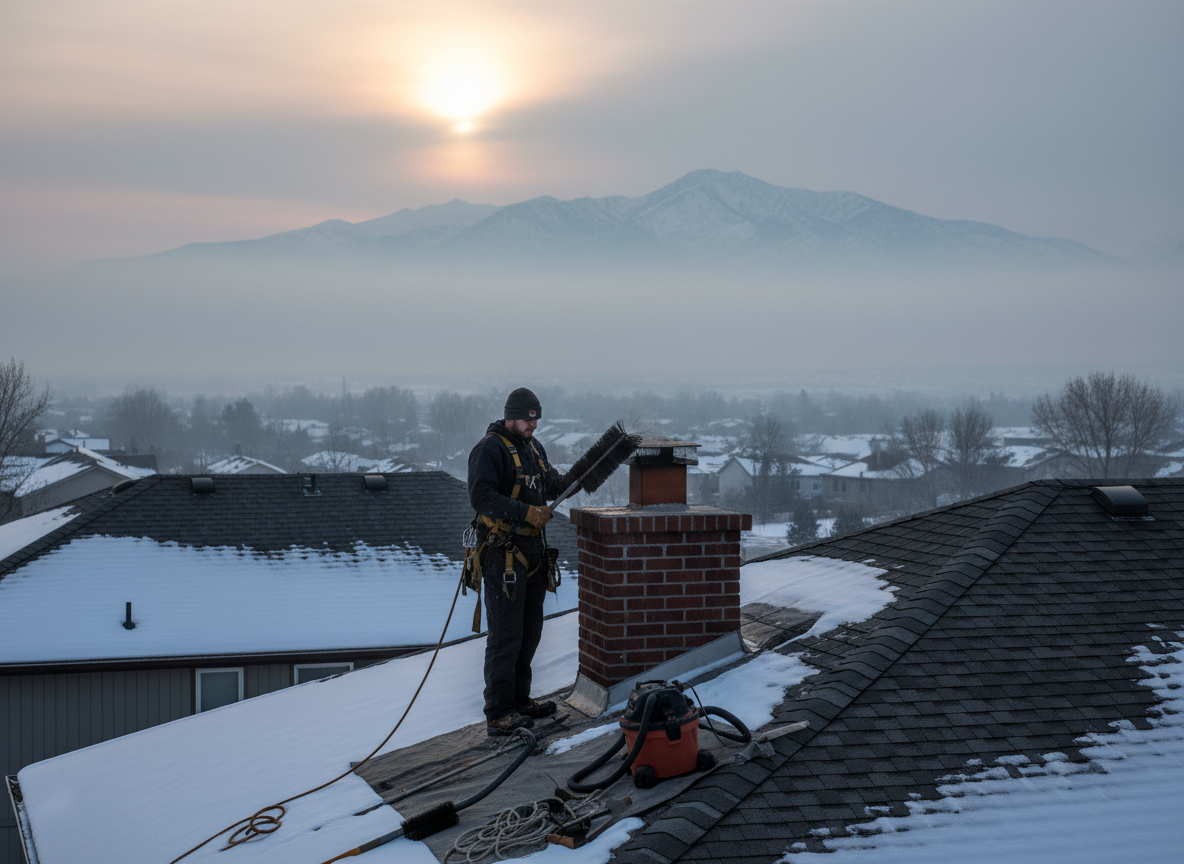
To prepare your chimney for inversion season in Midvale, start with a full inspection of the flue, crown, and liner followed by targeted cleaning and sealing before temperatures drop and inversions set in across Salt Lake County. Older brick homes common in Old Town Midvale and Bingham Junction often have 40- to 60-year-old masonry that cracks from freeze-thaw cycles during the semi-arid region's cold winters. These conditions force more frequent fireplace use while trapping emissions close to the ground, raising risks of smoke backdraft and creosote buildup. Homeowners near the Bingham Junction TRAX Station or Midvale City Park see the same pattern each year when warm summer afternoons give way to sharp overnight freezes.
Inspecting Chimney Liners Before Winter Inversions
Inversion season in Midvale brings prolonged periods of stagnant air that keep smoke and particulates low in the valley. A damaged liner allows creosote to seep into brick joints and can send carbon monoxide back into living spaces during heavy use. Walk the roofline in early fall and check for white efflorescence on bricks, which signals moisture intrusion from the previous spring. In homes built before 1970 around Old Town Midvale, clay tiles often shift or crack after decades of expansion and contraction. Schedule a chimney inspection service to verify liner integrity before the first sustained cold snap arrives from the west.
Cleaning Flues to Reduce Smoke During Trapped Air Events
Creosote accumulates faster when residents burn more wood to stay warm through Salt Lake County inversions. A 1/8-inch layer already restricts draft enough to push smoke indoors once the inversion lid forms. Midvale's semi-arid climate dries wood quickly in summer, yet winter humidity spikes from valley fog can make that same wood harder to ignite cleanly. Remove all debris and hardened glaze down to bare flue tile so the chimney draws steadily when temperatures hover in the teens. Pair this step with chimney maintenance to keep the system clear through repeated burn cycles.
Sealing Crowns and Flashing Against Freeze Damage
Concrete crowns on Midvale chimneys crack when water freezes inside hairline fissures during overnight lows. Once water penetrates, repeated cycles spall the crown and allow rain to reach the flue. Metal flashing around the roof line near West Jordan and Murray borders also loosens from thermal movement. Apply a breathable masonry sealer rated for 20-degree temperature swings after any tuckpointing or crown repair. This step prevents moisture from reaching interior brick during the long stretches between thaws that characterize local winters. See related guidance in When To Schedule Chimney Liner Checks In Midvale for timing after sealing work.
Addressing Draft Issues Common in Local Housing Stock
Many Midvale residences sit on small lots with mature trees that block prevailing winds, reducing natural draft during inversions. Damper doors warped by years of heat fail to close tightly, letting cold air enter the flue and chill the liner. In Bingham Junction homes with metal chimneys, interior rust flakes can further obstruct flow. Test draft by holding a smoke source at the fireplace opening on a calm day; steady upward movement confirms the system can overcome the dense cold air mass that settles over the valley. When draft remains weak, review Cost Factors For Chimney Flue Repair In Salt Lake County to understand repair scope before the season peaks.